


Recently, we welcomed eight sets of denominational judicatory leaders to our campus. They came to learn about Houses of Hope, a process for rural and small-town congregations who are seeking what is next or stuck in uncertainty. They stayed to learn the process and become prepared to train others in their areas to accompany congregations.
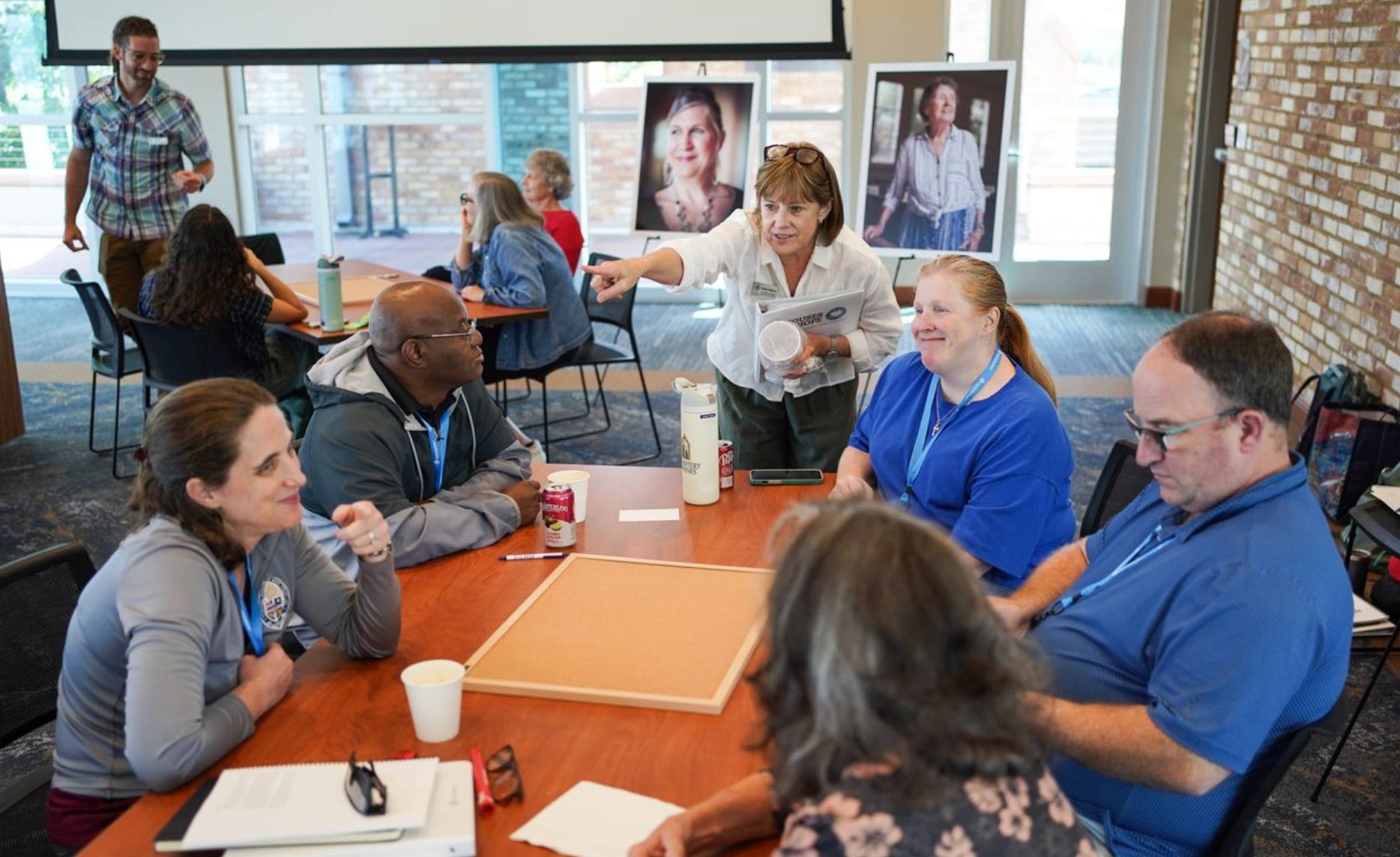
Houses of Hope includes four pathways: Discernment, Core Capacities, Gratitude, and Forgiveness. Our partners were very receptive—even excited about the possibilities for investing with the rural and small town congregations in their spheres of responsibility.
These leaders found something fresh and energizing as they imagined taking the Houses of Hope pathways back home. That experience, in and of itself, brought us hope. So many of these leaders are in the unique position of leading from the middle. They work squeezed with expectations from above--the Bishop, District Superintendent, National Office--by expectations for growth, change, innovation, and measurable results. Without much clarity about how those things are actually supposed to happen. Leaders in the middle are left trying to translate broad institutional hopes into something concrete while carrying the weight of knowing that the answers are rarely simple and rarely successful if not organically grown.
On the other side, they face the congregations on the ground. The people in congregations are often dedicated members who love their church, but face difficulties as things around them change. They want a pastor, and they cannot afford one, or they cannot find one. Our partners have many demands and few resources. This pressure can feel like being asked to do more, change more quickly, or solve problems that are much more complicated on the ground than they appear from a distance. They are caught between the expectations of those above them and the realities of the congregations they know and love, often with limited resources to bridge the two.
These incredible leaders tell us that they do not often find any offerings that start with the mindset and realities of small churches in general and especially small-town and rural churches. They see what we are offering as embracing who those congregations are and helping them live more fully into their identities, without seeing small or rural as somehow less-than. They have reported time and time again that with Houses of Hope we go deep into the core logic of a faithful community. They reconnect to tradition and open themselves to the Holy Spirit to become more fully alive as who and whose they are. To use more familiar institutional language, the process builds discipleship and addresses leadership development from within their own local context.
Houses of Hope takes a different approach, and the leaders in the middle value it. One part of the difference is that we say go slow—take your time—let the Spirit do its work. This can be like speaking a foreign language in a conversation with the pressures from above and below. It is very hard when the system holds a sense of crisis and urgency.
One partner who also serves as a hospital chaplain helped us with this. She said when the team is faced with a crisis in that context, the first thing the leader says is “stop.” Stop and breathe, think about what we are doing, work with what we know, and pay attention. We learned that especially in a crisis of extreme urgency, the first best move is to stop and take a breath. Or as we learned from adrienne maree brown’s teaching about emergent strategy, go slow to go fast. [MW1] Houses of Hope’s process counters to the messaging churches hear from the top and to how they may intuitively feel on the ground.
As we gathered over days with those courageous leaders from the middle, we became increasingly humbled as we were reminded how much they carry. Their love for the church is deep, their jobs aren’t easy, and they are often asked to hold together realities that seem increasingly difficult to reconcile.
Perhaps that is why “stop” feels like such an important word. Not stop as in give up or do nothing, but stop long enough to breathe, pay attention, remember what we know, and listen for what the Spirit is doing. In a church culture that so often tells us that the answer is to move faster, these leaders are creating space to help congregations discover what might become possible when we slow down.
That is what we hope Houses of Hope can offer them: not one more thing to carry, but a way to help the congregations they love stop, breathe, listen, and remember who and whose they are. And from that deeper place, discern what comes next.